
SHILAJIT
Black Gold From the Himalayan Mountains
*This blog post is not medical advice. It is merely a source for your own research. Consult your doctor before using or acting upon any of the information in this blog post. This information has not been approved by the Food and Drug Administration. We are not responsible for your personal actions.
What Is Shilajit and Where Is It From?
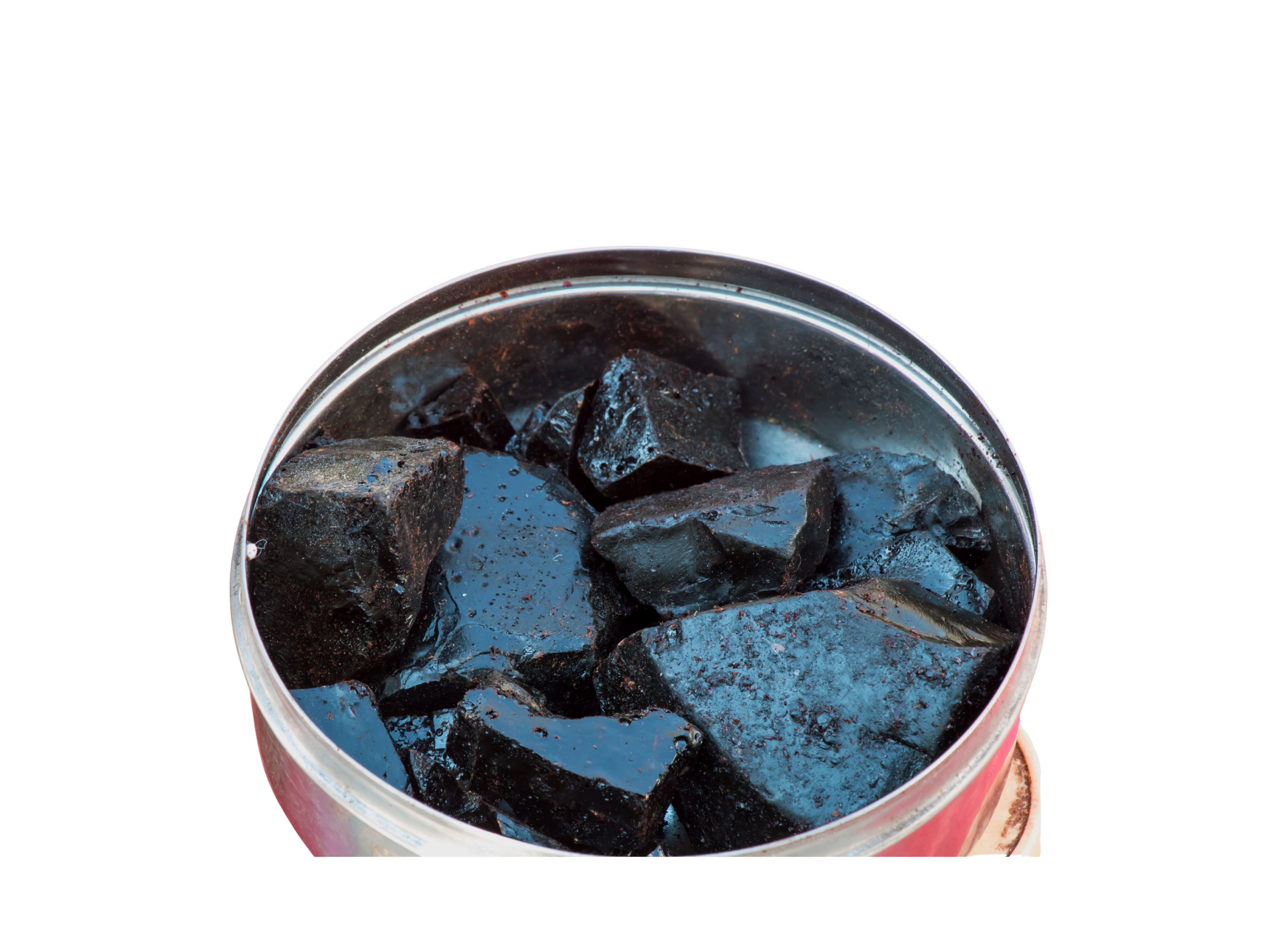
Shilajit is a natural substance found in the Himalayan Mountains, a South East Asian mountain range spanning five countries: India, Nepal, Bhutan, China, and Pakistan. Shilajit is an exudate (fluid) of certain rocks and stones of the mountains. It is a complex mixture of both organic and inorganic substances such as decomposed plant matter, minerals, trace elements, animals and humic substances formed over centuries. It is black and tar-like. When touched, it is smooth and pliable yet dense. When exposed to warmth, it becomes soft and sticky, but when cold becomes hard and brittle. It has been described as having a smell like asphalt.
How Is It Made and How Do You Use It?
Shilajit can be consumer in a few different forms. Each form still contains the nutritional properties and benefits.
RESIN
Traditionally, the resin was collected as it emerged from the rock fissuere and put through a purification process. One purification method involves pulverizing the black greasy stones of shilajit and dissolving them in water. The solids are then filtered out and water evaporated to concentrate the shilajit. Another method is to boil the shilajit in water. After boiling, a creamy film develops and this film is removed and dried in the sun. To improve assimilability, the Shilajit can also be boiled in the concoction of Triphala.
POWDER
Shilajit powder is created by drying and grinding the resin, resulting in a fine powder that is easier to mix into drinks and foods.
SOLID
Shilajit solid (tablets or capsules) is made by compressing the resin into solid forms.
Discovery
There was no particular person or guru nor singular event that led to the discovery of Shiljit. Rather, it is believed that people observed it being consumed by animals (particularly monkeys) and associated its consumption with strength and longevity. This, in turn, led to Shilajit's use as a dietary and medicinal supplement.
Properties and Components
- Fulvic and Humic Acid
- Minerals and Trace Elements (Calcium, Magnesium, Iron, etc)
- Bioactive Components (Amino Acids, Plant-Based Polyphenols, etc.)
- Dibenzo-a-pyrones (DBPs)
- And many more components that are not listed
Names of Shilajit
Shilajit is a Sanskrit word that means "Conqueror of Rock" or "Winner of Mountains". In English, it is referred to as Asphaltum, Mineral Wax, Mineral Pitch, Jew's Pitch, Ozokerite, or Black Bitumen.
Other Names
- Asmaja
- Asmajatuka
- Adrija
- Gaireya
- Girija
- Kanmandam
- Memiya
- Punjabinum
- Saileya
- Shilaja
- Shiladhatuja
- Shilamaya
- Shilasweda
- Shilaniryasa
How to Identify Pure Shilajit
Water Solubility Test
Drop a small portion of Shilajit into warm water. True Shilajit will dissolved completely and turn the water dark red or reddish brown without residue. Fake Shilajit will not dissolve and may leave behind an oily or chalk substance.
Flame Test
Place a small amount of Shilajit on a spoon and expose it to a direct flame. True Shilajit will not burn but will bubble up and emit an earthy aroma. Fake Shilajit catches fire and burns like plastic.
Alcohol Solubility Test
Place a small amount of Shilajit into a bottle of alcohol and stir. True Shilajit does not dissolve in alcohol whereas Fake Shilajit may dissolve.
Texture and Consistency Test
True Shilajit has a sticky tar-like consistency at room temperature. When cooled, it hardens and is brittle but becomes soft once warmed. Fake Shilajit is either too hard or too liquid.
Taste Test
True Shilajit has a strong, bitter and slightly smoky taste whereas Fake Shilajit will have a mild or sweet taste.
Pliability Test
True Shilajit is pliable and stretches but does not break when rubbed between the fingers. Fake Shilajit either crumbles too easily or is too smooth.
BENEFITS
- High in iron and valuable minerals
- Assists in resisting wasting and degenerative diseases
- Support fertility and libido
- Promotes fertility and libido
- Supports blood suagr and urinary tract health
- Excellent for anxiety for Kapha Dosha types
- Helps maintain kidney function
- Strengthens the immune system
- Adaptogenic herb
- Helps to improve memory and cognitive function
- Promotes skin youthfulness
- Supports cellular renewal
- May assist in regulating menstrual cycle
- Helps with high altitude sickness
- and much more